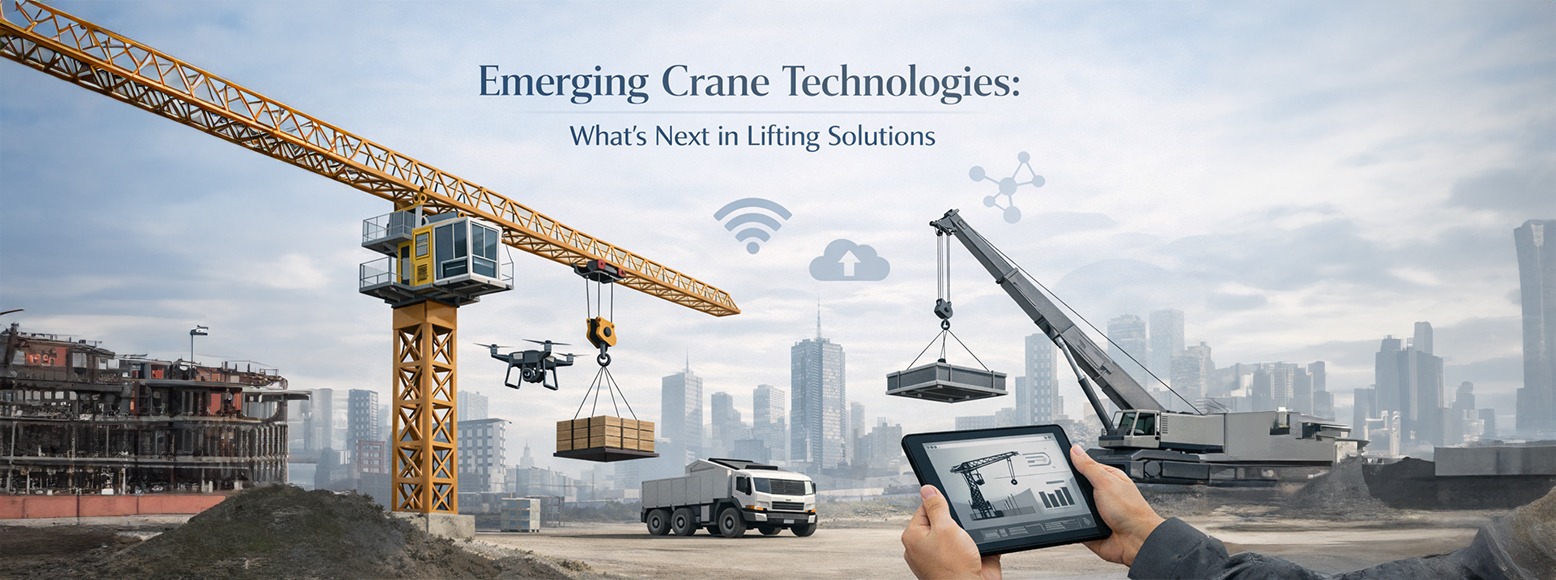
Emerging Crane Technologies: What’s Next in Lifting Solutions
The crane industry is no longer just about steel, cables, and raw lifting power. Across the UAE, from Dubai’s skyline projects to Abu Dhabi’s industrial zones, Sharjah’s manufacturing hubs, and port operations in Jebel Ali and Khalifa Port, cranes are rapidly evolving into smart, connected, safer, and more sustainable machines.
If you’re new to crane technologies or simply trying to understand where lifting solutions are heading, this guide is designed for you. We’ll break down emerging crane technologies in simple terms, explain why they matter in the UAE, and help you make informed decisions without overwhelming technical jargon.
Why Crane Technology Matters More Than Ever in the UAE
The UAE is unique when it comes to lifting requirements:
- Mega construction projects (high-rise towers, bridges, airports)
- Heavy industrial facilities (oil & gas, power plants, desalination)
- World-class ports and logistics hubs
- Strict safety regulations and sustainability goals
- Extreme weather conditions (heat, sand, humidity)
Because of this, traditional cranes alone are no longer enough. The market demands:
- Higher safety standards
- Faster project timelines
- Lower downtime
- Energy-efficient operations
- Compliance with UAE regulations
Emerging crane technologies directly address these challenges.
1. Smart Cranes and IoT: Making Cranes “Think.”
What Is a Smart Crane?
A smart crane uses internet connectivity (IoT) sensors and software, to monitor itself in real time.
How It Works
Sensors installed in the crane collect data such as:
- Load weight
- Motor temperature
- Structural stress
- Operating hours
- Wind speed
This data is sent to a dashboard where operators or managers can monitor performance.
Why It’s Important in the UAE
- Extreme heat can cause overheating — smart systems alert operators early
- Remote project sites benefit from real-time monitoring
- Prevents costly breakdowns in high-value projects
Common Uses in the UAE
- Tower cranes in Dubai high-rises
- Overhead cranes in industrial plants
- Port cranes handling continuous operations
2. Automation and Remote Crane Operation
What Is Automated Crane Technology?
Automation allows cranes to:
- Perform repetitive tasks automatically
- Reduce human error
- Operate remotely from control rooms
Remote Crane Operation Explained Simply
Instead of sitting inside a crane cabin:
- Operators control the crane from a safe, air-conditioned control room
- Cameras and sensors provide full visibility
- Movements are smoother and more precise
Why This Is Growing in the UAE
- Improves worker safety in harsh environments
- Reduces heat exposure
- Aligns with the UAE’s push toward smart industries
Popular Applications
- Ports and terminals
- Steel plants
- Large warehouses
- Precast concrete facilities
3. Artificial Intelligence (AI) in Crane Operations
What Does AI Do in Cranes?
AI helps cranes:
- Detect obstacles
- Reduce load sway automatically
- Optimize lifting paths
- Learn from past operations
For Example
If a crane notices repeated sway patterns during lifting, AI adjusts future movements automatically — without the operator needing to intervene.
Benefits for UAE Projects
- Safer lifting in crowded construction sites
- Faster operations
- Less reliance on highly specialized operators
AI is especially valuable for complex lifts common in infrastructure and oil & gas projects.
4. Advanced Safety Technologies: A Major Focus
Safety is non-negotiable in the UAE. New crane technologies focus heavily on preventing accidents before they happen.
Key Safety Innovations
- Anti-collision systems (crane-to-crane and crane-to-structure)
- Overload protection
- Wind speed monitoring
- Emergency stop automation
- Wearable safety devices for workers
Why It Matters Locally
- UAE regulations demand strict safety compliance
- Insurance costs are reduced
- Projects face fewer delays due to incidents
5. Digital Twins: Virtual Cranes Before Real Lifts
What Is a Digital Twin?
A digital twin is a virtual replica of a real crane.
How It Helps
- Simulate lifts before execution
- Identify risks
- Optimize crane positioning
- Plan complex lifts safely
Use
Digital twins are increasingly used in:
- Mega construction projects
- Industrial shutdown planning
- Heavy module installation
This technology is especially useful for high-value, one-time lifts where mistakes are costly.
6. Electrification and Sustainable Crane Solutions
Why Sustainability Matters
The UAE is actively working toward:
- Net-zero targets
- Reduced carbon emissions
- Cleaner construction practices
Emerging Sustainable Crane Technologies
- Fully electric cranes
- Hybrid cranes
- Energy-efficient motors
- Regenerative braking systems
Benefits
- Lower fuel costs
- Reduced emissions
- Quieter operation (important for urban projects)
Electric cranes are becoming popular in Dubai and Abu Dhabi urban zones.
7. 5G and High-Speed Connectivity
Why 5G Matters for Cranes
5G enables:
- Ultra-low latency communication
- Real-time video streaming
- Reliable remote operation
UAE Advantage
The UAE already has a strong 5G infrastructure, making it an ideal environment for:
- Remote crane control
- Smart ports
- Fully automated terminals
8. Modular and Advanced Crane Manufacturing
What Are Modular Cranes?
Modular cranes are built using interchangeable components.
Why They’re Useful in the UAE
- Faster installation
- Easier transportation across emirates
- Flexible configuration for different projects
This is especially beneficial for short-term or multi-site projects.
Who Should Consider Emerging Crane Technologies?
These technologies are ideal for:
- Construction companies
- Port and logistics operators
- Oil & gas contractors
- Manufacturing plants
- Facility managers
- Project consultants
Even beginners benefit because modern cranes are easier to operate, safer, and more reliable.
Common Challenges and How Technology Solves Them
| UAE Challenge | Technology Solution |
| Extreme heat | Sensor-based monitoring |
| Skilled operator shortage | Automation & AI |
| Tight project timelines | Predictive maintenance |
| Safety compliance | Smart safety systems |
| Sustainability goals | Electric & hybrid cranes |
Choosing the Right Crane Technology
| Your Priority | Recommended Technology |
| Maximum safety | AI + Anti-collision systems |
| Urban construction | Electric cranes |
| Heavy industrial lifting | Smart cranes + Digital twins |
| Port operations | Remote & automated cranes |
| Budget optimization | Predictive maintenance systems |
| Short-term projects | Modular crane designs |
Frequently Asked Questions (FAQs)
1. Are smart cranes suitable for small projects in the UAE?
Yes. Even small projects benefit from improved safety, monitoring, and reduced downtime.
2. Do automated cranes replace operators?
No. Operators remain essential, but their role shifts to supervision and control.
3. Are electric cranes powerful enough for heavy lifting?
Yes. Modern electric cranes can handle heavy loads efficiently.
4. Is AI crane technology expensive?
Initial costs may be higher, but long-term savings from reduced accidents and downtime are significant.
5. Are these technologies approved under UAE regulations?
Most emerging technologies are designed to meet or exceed UAE safety standards.
6. Can older cranes be upgraded?
In many cases, yes. Sensors, software, and safety systems can be retrofitted.
7. Which UAE sectors benefit the most?
Construction, ports, oil & gas, manufacturing, and logistics.
8. How soon will autonomous cranes become common?
Semi-autonomous cranes are already in use; full autonomy will grow gradually over the next decade.
Conclusion:
The future of crane technology in the UAE is smart, safe, sustainable, and connected. Whether you’re a beginner, a business owner, or a project manager, understanding these technologies helps you:
- Reduce risks
- Improve efficiency
- Stay competitive
- Meet regulatory requirements
As the UAE continues to push boundaries in construction, infrastructure, and industrial growth, advanced lifting solutions will play a critical role in shaping the nation’s skyline and economy.