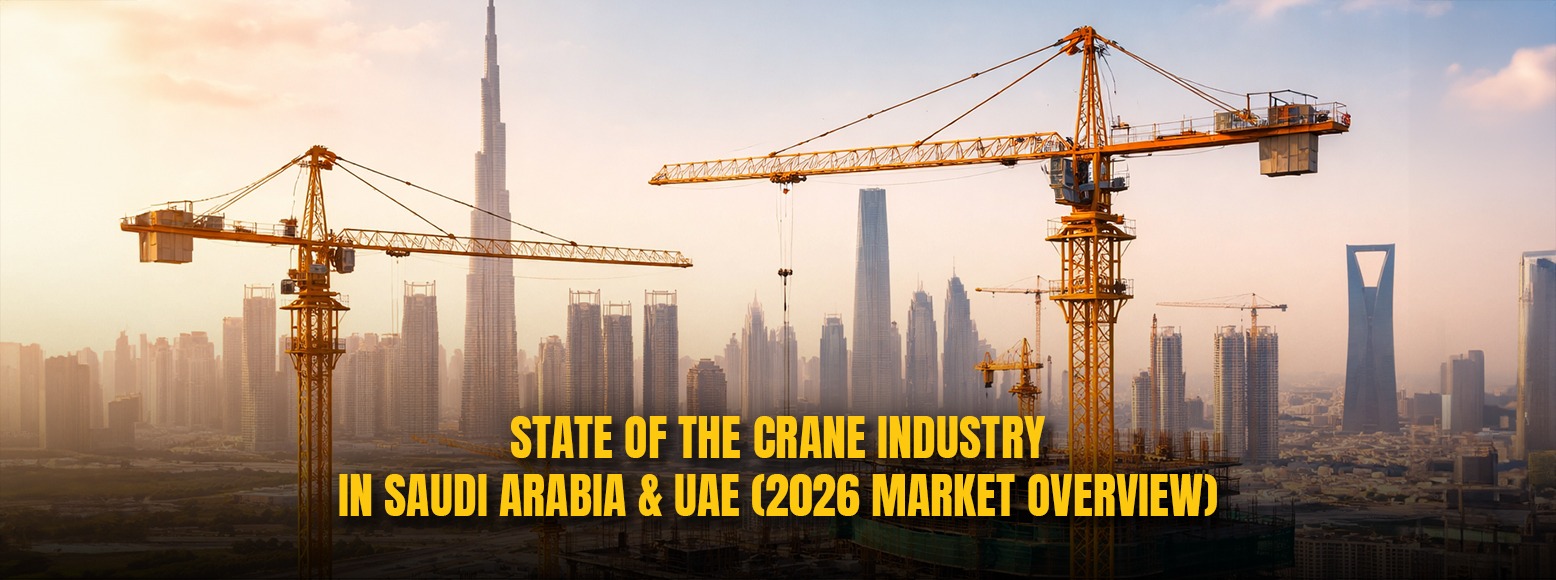
State of the Crane Industry in Saudi Arabia & UAE
Why the Crane Industry Matters in the Gulf
If you are new to the construction, infrastructure, logistics, or heavy equipment space, the crane industry might feel like a niche topic. In reality, cranes are one of the most critical enablers of economic growth in the Gulf region. From skyscrapers and megaprojects to ports, refineries, metros, and warehouses, nothing big gets built without cranes.
As we move into 2026, Saudi Arabia and the United Arab Emirates (UAE) stand out as the two most influential crane markets in the Middle East. Both countries are investing heavily in infrastructure and diversification, yet they differ in scale, pace, and market dynamics.
This beginner‑friendly guide is designed to help:
- New investors understand the market landscape
- Contractors and EPC firms plan equipment strategies
- Equipment suppliers and rental companies identify opportunities
- Anyone curious about how Vision 2030 and regional development translate into real equipment demand
By the end of this blog, you will clearly understand where demand is coming from, what types of cranes are most important, how Saudi Arabia and the UAE compare, and what decisions businesses should consider in 2026 and beyond.
Understanding the Crane Industry
What Is a Crane?
A crane is a machine designed to lift, lower, and move heavy loads horizontally and vertically. Cranes are essential wherever materials are too heavy, large, or dangerous to move manually.
Common Crane Types You’ll Hear About
If you are new to the industry, these are the main crane categories used in Saudi Arabia and the UAE:
- Mobile Cranes—Truck-mounted or all-terrain cranes used for flexible, short-term lifting tasks
- Crawler Cranes—Heavy-duty cranes that move on tracks; ideal for megaprojects and large infrastructure
- Tower Cranes—Fixed cranes used in high-rise and dense urban construction
- Overhead Cranes—Installed inside factories, warehouses, and industrial plants
- Port & Container Cranes—Specialized cranes for ports, terminals, and logistics hubs
Each type serves a different purpose, and market demand shifts depending on what kind of projects are being built.
The Gulf Construction & Infrastructure Boom
Saudi Arabia and the UAE are not growing by accident. Their crane demand is directly tied to long-term national strategies.
Saudi Arabia: Vision 2030
Saudi Arabia’s Vision 2030 is reshaping the economy away from oil dependency. This includes:
- New cities and regions (NEOM, The Line)
- Tourism and hospitality developments (Red Sea Project)
- Entertainment and sports hubs (Qiddiya)
- Transport infrastructure (rail, metros, airports, ports)
All of these require large crane fleets operating over long project timelines.
UAE: Urban Density & Global Hub Strategy
The UAE focuses on:
- High‑rise urban development (Dubai, Abu Dhabi)
- Logistics, ports, and free zones
- Industrial clusters and warehousing
- Continuous upgrades rather than single mega-cities
This creates steady, recurring demand, especially for tower, mobile, and overhead cranes.
Saudi Arabia Crane Industry Overview
Market Size & Structure
Saudi Arabia represents the largest crane market in the Middle East by volume and value. The country’s scale, land size, and number of simultaneous megaprojects make it unique.
Key characteristics of the Saudi crane market:
- Dominated by large crawler and mobile cranes
- High demand for long-term deployment
- Strong preference for rental over ownership
- Growing localization and service requirements
Main Demand Drivers
1. Megaprojects
Projects like NEOM, The Line, Red Sea Global, and Qiddiya require:
- Heavy crawler cranes for infrastructure and modular construction
- Mobile cranes for logistics, assembly, and utilities
- Tower cranes for vertical construction in urban zones
2. Transport & Logistics
Saudi Arabia is investing heavily in:
- Railways and metros
- Ports and logistics corridors
- Airports and industrial zones
These projects drive demand for specialized lifting solutions and port cranes.
3. Oil, Gas & Energy Transition
While diversification is ongoing, oil & gas still matters. Additionally:
- Power plants
- Renewable energy (wind and solar)
- Grid infrastructure
All require cranes, especially heavy‑lift and crawler types.
Rental Market Dominance
Saudi Arabia strongly favors crane rental models because:
- Projects are temporary but massive
- Contractors avoid capital expenditure
- Maintenance and operator responsibility stays with rental firms
This makes the rental segment one of the most attractive investment areas in the Kingdom.
Challenges in Saudi Arabia
- Shortage of certified operators and technicians
- Complex logistics in remote project locations
- Strict safety and compliance requirements
- Project pacing adjustments can delay demand cycles
Despite these challenges, long‑term fundamentals remain strong.
UAE Crane Industry Overview
Market Profile
The UAE crane market is smaller than that of Saudi Arabia but more mature and technologically advanced.
Key characteristics:
- High urban density
- Faster project cycles
- Strong focus on efficiency and safety
- Heavy use of tower and mobile cranes
Core Demand Segments
1. High-Rise & Mixed-Use Construction
Dubai and Abu Dhabi continue to develop:
- Residential towers
- Commercial skyscrapers
- Mixed-use developments
This sustains continuous demand for tower cranes, especially rental fleets.
2. Logistics & Warehousing
The UAE’s role as a regional trade hub fuels demand for:
- Overhead cranes
- Port cranes
- Automated material-handling systems
3. Industrial & Free Zones
Manufacturing and processing zones use cranes for:
- Assembly lines
- Maintenance operations
- Storage and movement of heavy goods
Rental vs Ownership in the UAE
Rental is also dominant in the UAE, but
- Some large contractors own fleets
- Rental cycles are shorter
- Equipment utilization is generally higher than in Saudi Arabia
Key Challenges
- High competition among rental companies
- Dependence on imported equipment
- Rising costs for skilled labor
- Tight urban regulations
Technology & Sustainability Trends
Both markets are rapidly modernizing.
Smart & Connected Cranes
New cranes increasingly feature:
- Telematics and GPS tracking
- Load monitoring systems
- Predictive maintenance software
These improve safety, reduce downtime, and cut costs.
Electric & Hybrid Cranes
Environmental regulations and ESG goals are driving:
- Electric tower cranes
- Hybrid mobile cranes
- Lower-emission equipment fleets
This trend is stronger in the UAE but is accelerating in Saudi Arabia.
Safety & Regulation
Governments are enforcing:
- Operator certification
- Site safety compliance
- Equipment inspection standards
This favors professional rental companies and OEM‑backed service providers.
Saudi Arabia vs UAE: Key Differences Explained Simply
| Aspect | Saudi Arabia | UAE |
| Market Size | Very large | Medium |
| Growth Driver | Megaprojects | Urban & logistics |
| Project Duration | Long-term | Short-to-medium |
| Crane Types | Crawler, mobile | Tower, mobile |
| Rental Penetration | Very high | High |
| Technology Adoption | Growing fast | Advanced |
Opportunities for Businesses & Investors
Where the Opportunities Are
- Crane rental fleets
- Heavy-lift and crawler cranes
- Operator training services
- Maintenance and spare parts
- Smart crane technology integration
Who Benefits Most
- Rental companies with scale
- OEMs with local service presence
- Contractors with flexible equipment strategies
- Technology providers focused on safety and efficiency
Risks to Watch in 2026
- Project delays or rescoping
- Oil price volatility is affecting budgets
- Labor shortages
- Overcapacity in rental fleets
Smart players plan for cycles, not just booms.
Quick Decision Table (At-a-Glance Guide)
| If You Are… | Saudi Arabia | UAE |
| Rental Company | Best for large fleets & long contracts | Best for high utilization & quick returns |
| Contractor | Ideal for megaproject exposure | Ideal for urban projects |
| Investor | Higher growth, higher risk | Lower risk, stable demand |
| OEM | Localization opportunities | Tech‑driven premium market |
Frequently Asked Questions (FAQs)
1. Is the crane industry growing in Saudi Arabia and the UAE?
Yes. Both markets are growing, with Saudi Arabia leading in scale and the UAE in consistency.
2. Which country has higher crane demand?
Saudi Arabia has a higher total demand due to megaprojects, while the UAE has steadier year-round demand.
3. Are cranes usually rented or purchased?
Most cranes are rented, especially for large construction projects.
4. What crane type is most in demand?
Crawler cranes in Saudi Arabia; tower and mobile cranes in the UAE.
5. Is now a good time to invest in crane rental?
Yes, but success depends on fleet mix, utilization, and service quality.
6. How important is technology in modern cranes?
Very important. Smart features improve safety, uptime, and cost control.
7. Are electric cranes widely used?
Adoption is growing, especially in the UAE, and expanding in Saudi Arabia.
8. What skills are most in demand in this industry?
Certified crane operators, technicians, and safety professionals.
Final Thoughts
The crane industry in Saudi Arabia and the UAE is not just about machines—it is about nation‑building. In 2026, both markets remain highly attractive but require different strategies.
Saudi Arabia rewards scale, patience, and heavy-duty capability. The UAE rewards efficiency, technology, and operational excellence.
If you understand these differences, you can make smarter decisions—whether you are investing, renting, supplying, or simply learning the industry.