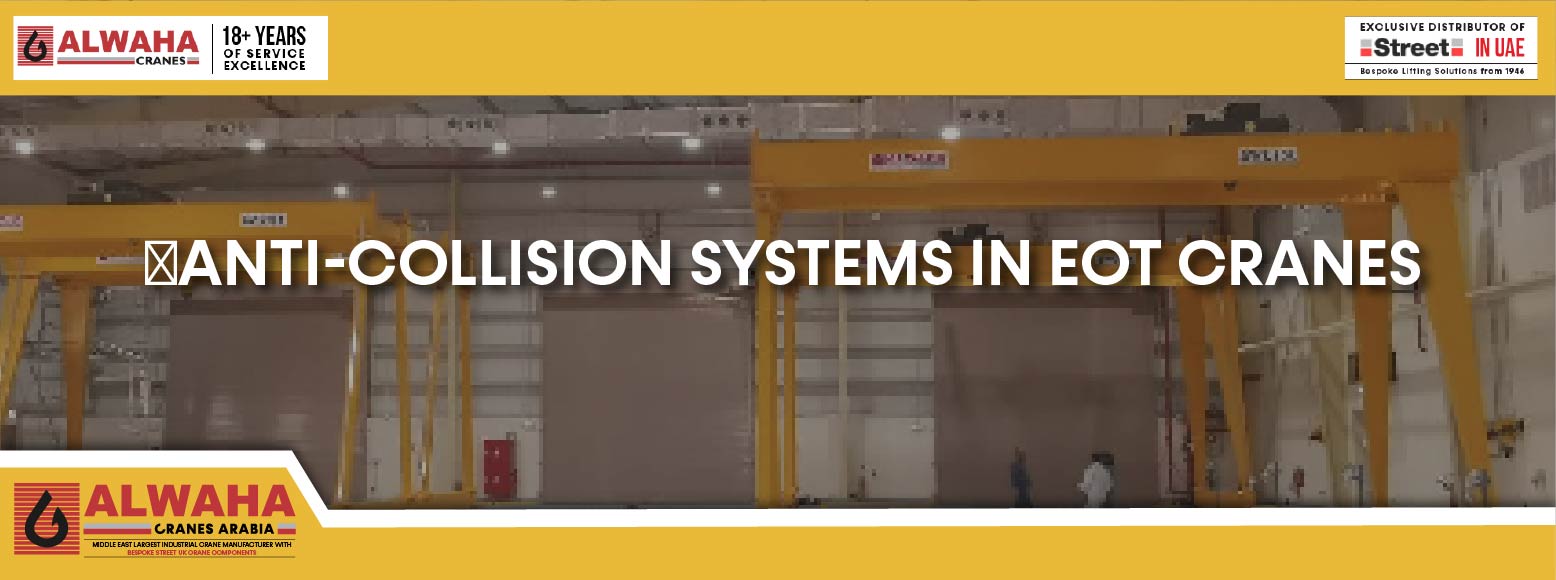
Anti-Collision Systems in EOT Cranes
Industrial facilities across Saudi Arabia rely on eot crane ksa solutions to move heavy materials safely and efficiently. In steel plants, warehouses, manufacturing units, logistics hubs, power plants, and fabrication workshops, multiple overhead cranes often operate on the same runway. Without an effective anti-collision system, these cranes can accidentally move too close to one another or strike building structures, leading to equipment damage, costly downtime, and serious safety risks.
An anti-collision system acts as an intelligent safety solution that continuously monitors the distance between cranes and nearby structures. It automatically alerts operators, reduces crane speed when required, and stops crane movement before a collision occurs. For industries in Saudi Arabia where productivity and workplace safety are top priorities, installing an anti-collision system is no longer optional—it has become an essential investment.
At Al Waha Cranes, we understand that modern crane systems require advanced safety technologies that comply with industrial standards while ensuring reliable day-to-day operation.
Table of Contents
| Section | Description |
|---|---|
| What is an Anti-Collision System? | Understanding the technology |
| Why EOT Cranes Need It | Common workplace risks |
| How It Works | Step-by-step operation |
| Main Components | Sensors, controllers and alarms |
| Types of Technologies | IR, Laser, Ultrasonic and more |
| Key Features | Safety and operational benefits |
| Applications | Industries using the system |
| Installation Process | Best practices |
| Maintenance Tips | Keeping the system reliable |
| Choosing the Right Solution | Selection factors |
| FAQs | Common questions |
What is an Anti-Collision System in an EOT Crane?
An anti-collision system is a safety device designed to prevent two overhead cranes from colliding while operating on the same runway or approaching fixed structures such as walls, columns, maintenance platforms, or end stops.
The system constantly measures the distance between moving cranes and nearby obstacles. When a crane enters the predefined safety zone, the system immediately takes action by:
- Alerting the operator
- Reducing travel speed
- Automatically stopping movement if required
- Preventing crane-to-crane impact
- Protecting expensive machinery
Modern anti-collision systems operate continuously without interrupting normal crane operation.
Why Are Anti-Collision Systems Important?
Many factories in Saudi Arabia operate multiple cranes inside a single production facility. During busy production schedules, operators may not always notice another crane approaching from the opposite direction.
Without collision protection, the following issues may occur:
- Structural damage
- Broken crane wheels
- Bent bridge girders
- Damaged runway beams
- Production shutdown
- Expensive repairs
- Worker injuries
- Material loss
Even one collision can stop production for several days.
This is why industries across KSA increasingly install intelligent collision avoidance systems as part of their crane modernization programs.
How Does an Anti-Collision System Work?
The operating principle is surprisingly simple.
Each crane is equipped with sensors mounted on both ends. These sensors continuously transmit signals toward a reflector or another sensor installed on the opposite crane.
The controller measures the exact distance between cranes.
The process typically follows these steps:
Step 1: Distance Detection
Sensors constantly scan the operating area.
Step 2: Distance Calculation
The controller calculates the gap between two cranes using technologies such as:
- Infrared
- Laser
- Ultrasonic
- Time-of-Flight (ToF)
Step 3: Safety Monitoring
The controller compares the measured distance with the preset safety distance.
Step 4: Warning Stage
If cranes move too close:
- Flashing warning lights activate
- Audible alarms sound
- Operator receives a warning
Step 5: Speed Reduction
If the crane continues moving closer, the controller automatically reduces travel speed.
Step 6: Automatic Stop
If the minimum safe distance is reached, power to the travel motion is interrupted, preventing collision.
Time-of-Flight (ToF) Technology Explained
Many modern systems use Time-of-Flight technology.
Instead of guessing the distance, the sensor measures the exact time taken by light to travel from the transmitter to the reflector and back again.
This method provides:
- High accuracy
- Fast response
- Long-distance measurement
- Reliable performance
- Stable operation in dusty environments
Some systems can detect obstacles up to 50 meters away.
Main Components of an Anti-Collision System
1. Distance Sensor
Measures the distance between cranes.
Common sensor types include:
- Infrared
- Laser
- Ultrasonic
2. Reflector
Returns the emitted signal back to the sensor.
3. Controller
Acts as the brain of the system.
It processes sensor data and decides whether to:
- Continue operation
- Slow down
- Stop crane travel
4. Relay Module
Disconnects the travel control circuit whenever the minimum safety distance is reached.
5. Warning Devices
These include:
- Buzzers
- Flashing lights
- Display panels
- Operator alarms
Different Types of Anti-Collision Technologies
Infrared-Based Systems
Infrared technology is one of the most commonly used solutions.
Advantages include:
- Low power consumption
- Reliable communication
- Fast response
- Cost-effective installation
Infrared light remains invisible to the human eye while providing accurate object detection.
Laser-Based Systems
Laser sensors offer greater accuracy.
Benefits include:
- Long measurement range
- High precision
- Stable operation
- Excellent performance in large workshops
Laser systems are commonly installed in steel plants and heavy manufacturing industries.
Ultrasonic Sensors
Ultrasonic sensors use sound waves instead of light.
They are suitable for:
- Dusty environments
- Low-visibility conditions
- Medium-distance detection
Time-of-Flight Sensors
ToF technology has become increasingly popular because it provides:
- Millimeter-level accuracy
- Faster measurements
- Better reliability
- Continuous monitoring
Features of Modern Anti-Collision Systems
Today’s intelligent systems provide much more than simple stopping functions.
Common features include:
- Automatic speed reduction
- Emergency stop function
- Continuous distance monitoring
- Adjustable safety distance
- Self-diagnostics
- Easy calibration
- LED status indicators
- Digital display
- High-temperature operation
- VFD compatibility
- Contactless sensing
- Low maintenance
Benefits of Installing an Anti-Collision System
Improved Worker Safety
The biggest advantage is protecting employees working around crane operations.
Reduced Equipment Damage
Preventing collisions significantly reduces repair costs.
Lower Maintenance Expenses
Less mechanical impact means:
- Longer wheel life
- Reduced gearbox wear
- Less structural damage
Higher Productivity
Unexpected crane breakdowns reduce production efficiency.
Collision prevention keeps operations running smoothly.
Better Compliance
Many industries require enhanced safety measures during crane operation.
Installing advanced protection systems supports workplace safety standards.
Longer Crane Life
Repeated impacts shorten crane lifespan.
Preventing collisions extends the service life of:
- Motors
- Gearboxes
- Wheels
- End carriages
- Structures
Industries That Need Anti-Collision Systems
These systems are commonly used across Saudi Arabia in:
- Steel plants
- Cement factories
- Power plants
- Oil & Gas facilities
- Petrochemical plants
- Ports
- Shipyards
- Heavy engineering workshops
- Automotive manufacturing
- Warehouses
- Logistics centers
- Paper mills
- Aluminum plants
- Food processing industries
Any facility operating multiple overhead cranes can benefit from collision avoidance technology.
Installation Process
Professional installation usually includes:
Site Survey
Engineers inspect:
- Crane runway
- Travel distance
- Crane speed
- Operating environment
Sensor Positioning
Sensors are mounted at locations providing the clearest line of sight.
Reflector Installation
Reflectors are aligned precisely with sensors.
System Calibration
Safety distance is programmed according to customer requirements.
Functional Testing
The complete system is tested under actual operating conditions before commissioning.
Maintenance Tips
Routine maintenance helps maintain system accuracy.
Recommended practices include:
- Clean sensors regularly
- Inspect wiring connections
- Verify reflector alignment
- Test alarms monthly
- Check relay operation
- Inspect mounting brackets
- Perform annual calibration
- Replace damaged sensors immediately
Preventive maintenance helps avoid unexpected failures.
Common Mistakes to Avoid
Many crane operators unknowingly reduce the effectiveness of anti-collision systems.
Avoid these mistakes:
- Ignoring warning alarms
- Blocking sensor paths
- Skipping calibration
- Using damaged reflectors
- Delaying maintenance
- Installing incompatible sensors
- Ignoring software updates
Choosing the Right Anti-Collision System
Not every crane requires the same solution.
Consider the following factors:
| Selection Factor | Why It Matters |
|---|---|
| Crane Speed | Faster cranes require quicker response time |
| Runway Length | Determines sensor range |
| Number of Cranes | Multi-crane systems need advanced monitoring |
| Environment | Dust, heat and humidity affect sensor selection |
| Control System | Must match VFD or contactor controls |
| Maintenance Needs | Choose systems with easy servicing |
| Expansion Plans | Allow future crane additions |
Why Industries in KSA Prefer Modern Safety Systems
Saudi Arabia continues investing in manufacturing, logistics, infrastructure, ports, and industrial development under Vision 2030. As facilities expand, crane traffic inside factories also increases.
Modern anti-collision systems help businesses by:
- Improving operational efficiency
- Meeting higher workplace safety expectations
- Reducing unplanned downtime
- Protecting valuable industrial assets
- Supporting continuous production
These advantages make anti-collision technology a practical long-term investment for businesses using eot crane ksa solutions.
Why Choose Al Waha Cranes?
At Al Waha Cranes, we provide complete overhead crane solutions for industries throughout Saudi Arabia.
Our services include:
- EOT crane installation
- Crane modernization
- Preventive maintenance
- Safety inspections
- Spare parts support
- Annual maintenance contracts
- Crane upgrades
- Anti-collision system integration
- Technical consultation
Our experienced engineers help industries improve both safety and operational reliability while minimizing downtime.
Final Thoughts
An anti-collision system is one of the most valuable safety upgrades for any overhead crane. It protects operators, prevents costly equipment damage, reduces maintenance expenses, and improves productivity across industrial facilities.
As industries continue to automate material handling operations, intelligent crane safety systems are becoming a standard requirement rather than an optional feature. Whether your facility operates two cranes or an entire fleet, investing in reliable collision prevention technology helps ensure smoother operations and long-term cost savings.
If your business is looking for dependable eot crane ksa solutions with advanced safety features, Al Waha Cranes can help you select, install, and maintain the right system for your operational needs.
Frequently Asked Questions
1. What is an anti-collision system in an EOT crane?
It is a safety system that detects nearby cranes or structures and automatically warns operators, reduces travel speed, or stops the crane to prevent collisions.
2. Which sensors are used in anti-collision systems?
Common technologies include infrared sensors, laser sensors, ultrasonic sensors, and Time-of-Flight (ToF) sensors.
3. Can anti-collision systems work with VFD cranes?
Yes. Most modern systems are compatible with Variable Frequency Drive (VFD) cranes as well as conventional contactor-controlled cranes.
4. How often should the system be inspected?
Routine inspections should be carried out monthly, while complete calibration and performance testing should be performed annually or according to the manufacturer’s recommendations.
5. Can older overhead cranes be upgraded?
Yes. Existing EOT cranes can usually be retrofitted with modern anti-collision systems without replacing the entire crane