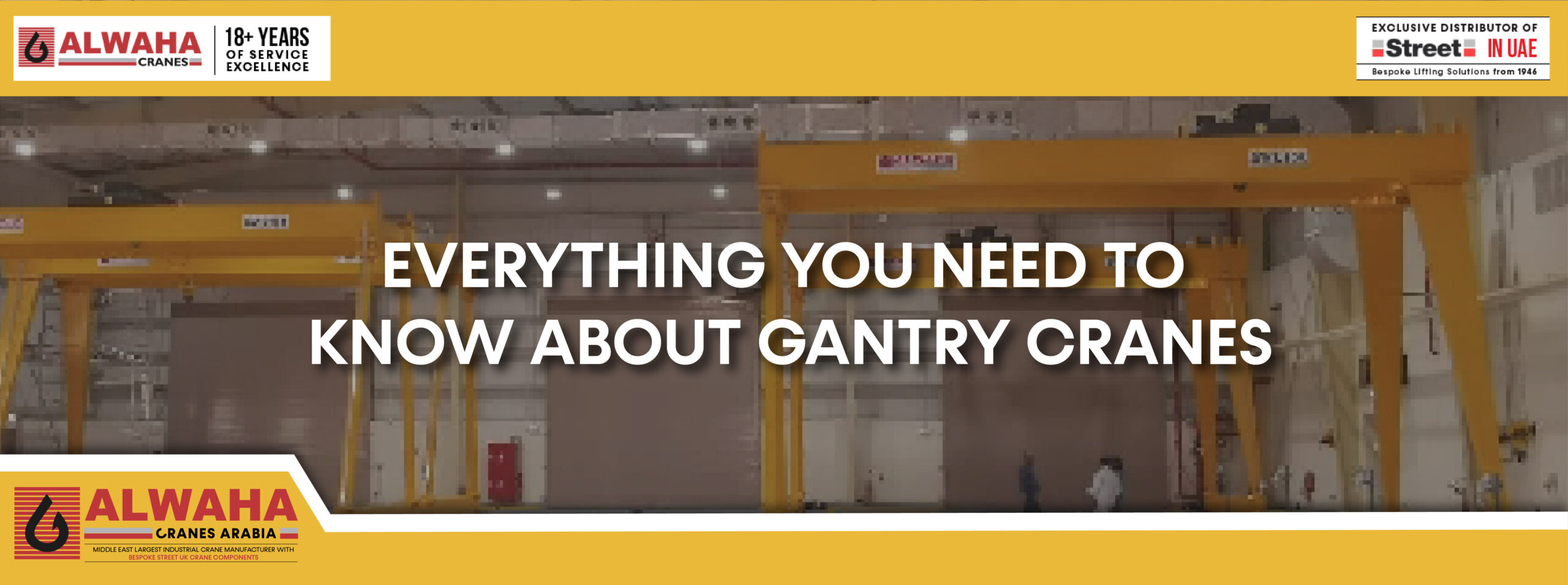
Everything You Need to Know About Gantry Cranes
Gantry Cranes are one of the most practical and widely used lifting solutions in industries like construction, manufacturing, shipping, and warehousing. If you want to understand how gantry crane works, where it is used, and how to choose the right gantry crane in KSA or anywhere else, this guide will help you with clear and simple explanations.
What Is a Gantry Crane?
A gantry crane is a type of overhead lifting system that stands on legs and moves on wheels or rails. Unlike fixed overhead cranes, it does not need to be attached to a building structure.
It is designed to lift, move, and position heavy materials safely and efficiently. Because of its flexible design, it can be used both indoors and outdoors.
Main Components of Gantry Cranes
To understand how a gantry crane works, you need to know its basic parts. A standard gantry crane usually has four main components:
- Two vertical legs (frames)
These support the entire structure. - Horizontal beam (girder)
This connects both legs and carries the load. - Trolley
Moves along the beam. - Hoist (manual or electric)
Lifts and lowers the load.
These parts work together to create a strong and stable lifting system.
How Does a Gantry Crane Work?
The working principle of gantry cranes is simple but powerful.
- The hoist lifts the load vertically
- The trolley moves the load horizontally along the beam
- The entire crane can move forward or backward (if mounted on wheels or rails)
This allows the crane to move heavy materials in multiple directions with ease.
Example Workflow:
- Load is attached to the hook
- Hoist lifts the material
- Trolley moves it across the beam
- Crane shifts position if needed
- Load is lowered safely at the target location
This combination of vertical and horizontal movement is what makes gantry cranes so efficient.
Types of Gantry Cranes
There are different types of gantry cranes based on usage and design.
1. Full Gantry Crane
- Has two legs running on rails
- Used in outdoor applications like shipyards and ports
2. Semi-Gantry Crane
- One leg runs on rails
- Other side is supported by a wall or structure
3. Portable Gantry Crane
- Lightweight and movable
- Ideal for workshops and small industries
4. Adjustable Gantry Crane
- Height and span can be adjusted
- Useful for different lifting needs
5. Single Girder vs Double Girder
| Type | Description |
|---|---|
| Single Girder | Light to medium loads |
| Double Girder | Heavy-duty applications |
Where Are Gantry Cranes Used?
Gantry cranes are used in many industries because of their flexibility.
Common Applications:
- Construction sites
- Warehouses
- Manufacturing plants
- Shipyards and ports
- Steel and cement industries
- Oil & gas sector (especially gantry crane in KSA)
Practical Uses:
- Lifting heavy machinery
- Moving raw materials
- Loading/unloading trucks
- Maintenance work
Their ability to work in open environments makes them ideal for outdoor projects.
Key Features of Gantry Cranes
Here are some important features that make gantry cranes popular:
- Mobility – Can be moved easily
- Flexibility – Works in multiple locations
- High load capacity – Can lift heavy loads
- Cost-effective – No need for building support
- Easy installation – Quick setup compared to overhead cranes
How to Choose the Right Gantry Crane
Choosing the right gantry crane depends on your specific needs.
Important Factors to Consider:
1. Load Capacity
- What weight do you need to lift?
- Always choose a crane with slightly higher capacity than required
2. Height of Lift
- How high do you need to lift materials?
3. Span Width
- Distance between the legs
4. Work Environment
- Indoor or outdoor?
- Dust, heat, or corrosive conditions (common in gantry crane in KSA environments)
5. Mobility Requirement
- Do you need a fixed or portable system?
6. Power Source
- Manual or electric hoist?
Simple Comparison Table
| Feature | Portable Gantry | Fixed Gantry |
|---|---|---|
| Mobility | High | Low |
| Installation | Easy | Complex |
| Cost | Lower | Higher |
| Load Capacity | Medium | Heavy |
| Usage | Workshops | Industrial sites |
Gantry Crane in KSA: Industry Demand
The demand for gantry crane in KSA is growing rapidly due to:
- Infrastructure development
- Oil & gas projects
- Construction expansion
- Industrial automation
Why Gantry Cranes Are Popular in KSA:
- Suitable for harsh weather conditions
- Ideal for outdoor work
- Strong and durable
- Easy to relocate across project sites
Industries in Saudi Arabia often require heavy lifting equipment that can handle extreme temperatures and large-scale operations.
Advantages of Using Gantry Cranes
Here are the main benefits:
1. No Building Support Needed
Unlike overhead cranes, gantry cranes don’t rely on ceilings or walls.
2. Cost Savings
Lower installation and maintenance costs.
3. Versatility
Can be used in multiple industries and applications.
4. Easy Maintenance
Simple structure means fewer breakdowns.
5. Quick Setup
Portable models can be assembled quickly.
Limitations of Gantry Cranes
While useful, gantry cranes also have some limitations:
- Require ground space
- Not ideal for very confined indoor areas
- May need regular inspection in outdoor environments
- Limited compared to fully automated crane systems
Safety Tips for Gantry Crane Use
Safety is critical when working with heavy lifting equipment.
Important Safety Guidelines:
- Always follow load capacity limits
- Inspect the crane before use
- Ensure proper training for operators
- Use proper rigging equipment
- Avoid lifting loads over people
- Keep the working area clear
Regular maintenance helps prevent accidents and ensures long-term performance.
Maintenance Tips for Long Life
To keep your gantry crane in good condition:
- Check bolts and joints regularly
- Inspect hoist and trolley
- Lubricate moving parts
- Protect from rust (especially in coastal or humid areas)
- Clean dust and debris
For gantry crane in KSA, extra care is needed due to heat and sand exposure.
Pricing of Gantry Cranes
The cost of gantry cranes depends on:
- Load capacity
- Size and span
- Material (steel or aluminum)
- Automation level
- Brand and quality
Disclaimer:
Basic standard price is not fixed. Anything can happen depending on customization, project requirements, and market conditions.
Tips Before Buying a Gantry Crane
Here are some practical tips:
- Always check manufacturer certifications
- Compare multiple suppliers
- Ask for warranty and service support
- Ensure availability of spare parts
- Choose trusted suppliers in your region
Future Trends in Gantry Cranes
The industry is evolving with new technology:
- Smart cranes with automation
- Remote-controlled systems
- IoT-based monitoring
- Energy-efficient designs
These innovations are improving safety and productivity.
Final Thoughts
Gantry cranes are a reliable and flexible solution for lifting heavy materials across industries. Whether you are planning to install a system in a warehouse, construction site, or looking for a gantry crane in KSA, understanding how gantry crane works and choosing the right type is very important.
By focusing on your specific needs, safety standards, and environment, you can select a gantry crane that delivers long-term performance and value.
Frequently Asked Questions (FAQs)
1. What is a gantry crane used for?
Answer: A gantry crane is used for lifting and moving heavy materials in industries like construction, warehouses, shipyards, and manufacturing. It helps in loading, unloading, and positioning heavy loads safely.
2. How does a gantry crane work?
Answer: A gantry crane works by using a hoist to lift materials vertically, while a trolley moves the load horizontally along a beam. The entire crane can also move if mounted on wheels or rails.
3. What are the main types of gantry cranes?
Answer: The main types include:
- Full gantry crane
- Semi gantry crane
- Portable gantry crane
- Adjustable gantry crane
- Single girder and double girder gantry cranes
4. Where are gantry cranes commonly used?
Answer: Gantry cranes are commonly used in:
- Construction sites
- Warehouses
- Shipyards
- Manufacturing plants
- Oil and gas industries, especially for gantry crane in KSA
5. What is the difference between gantry cranes and overhead cranes?
Answer: Gantry cranes stand on legs and move on the ground, while overhead cranes are fixed to a building structure and run on elevated tracks.
6. What factors should I consider before buying a gantry crane?
Answer: You should consider:
- Load capacity
- Height of lift
- Span width
- Work environment
- Mobility requirements
- Budget and customization
7. Are gantry cranes suitable for outdoor use?
Answer: Yes, gantry cranes are ideal for outdoor use. They are commonly used in open areas like construction sites and ports, and are well-suited for harsh environments like KSA.
8. What is the average cost of a gantry crane?
Answer: The cost depends on size, capacity, and features.
Disclaimer: Basic standard price is not fixed; it varies based on requirements and market conditions.
9. How often should a gantry crane be maintained?
Answer: Regular maintenance should be done monthly, with detailed inspections periodically to ensure safety and long-term performance.
10. Is a portable gantry crane a good option?
Answer: Yes, portable gantry cranes are ideal for small workshops and temporary jobs because they are easy to move, install, and use.