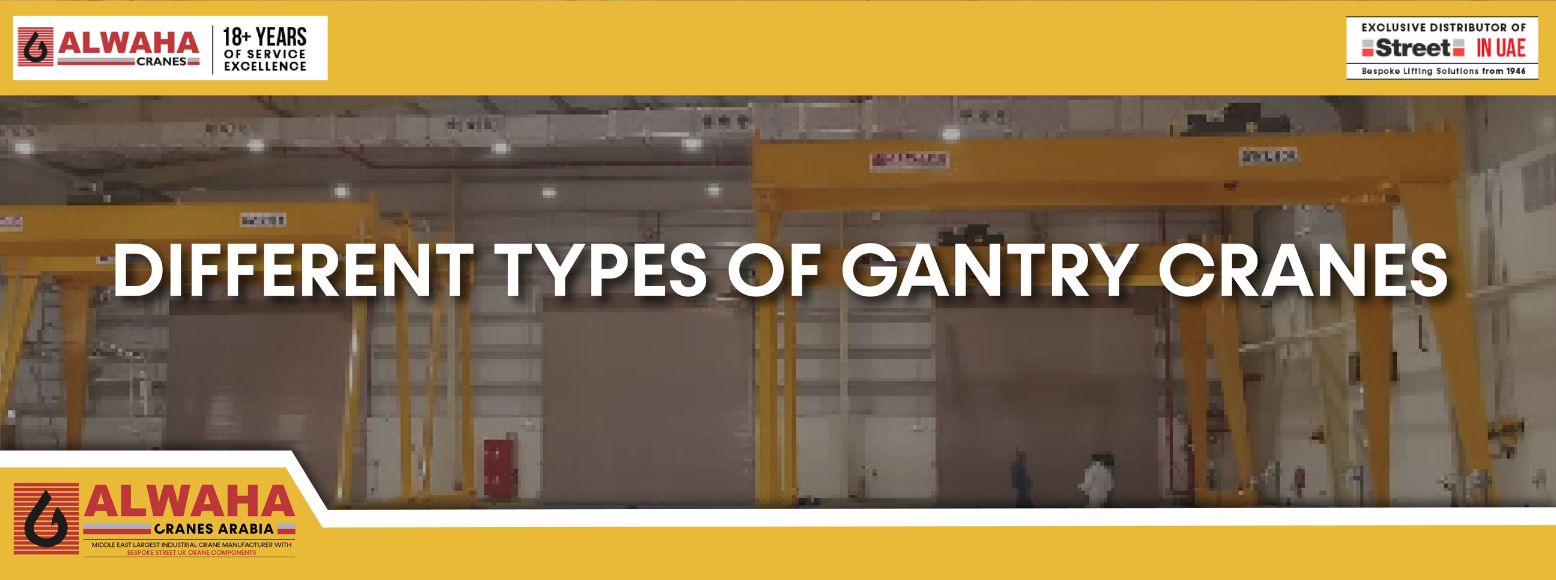
Different Types of Gantry Cranes
Gantry cranes are widely used in industries where heavy materials need to be lifted and moved safely. To understand how they work, it is important to first know what is crane and how different systems are designed. In simple terms, a gantry crane is a type of overhead lifting system supported by legs that move on wheels or rails.
This article explains the different types of gantry cranes, the role of a gantry girder, and how these systems are used in real industrial environments, including regions like gantry crane KSA setups.
What Is a Crane?
To begin with, let’s understand what is crane.
A crane is a mechanical device used to lift, lower, and move heavy loads. It uses components like hoists, wire ropes, chains, and motors to handle materials that cannot be moved manually.
Basic functions of a crane:
- Lifting heavy objects
- Moving materials horizontally
- Placing loads at specific locations
Cranes are essential in construction, manufacturing, shipping, and warehouse operations.
What Is a Gantry Crane?
A gantry crane is a type of crane that is supported by freestanding legs instead of being attached to a building structure. These legs run on rails, tracks, or wheels, allowing the crane to move across a workspace.
Key characteristics:
- Independent structure (not fixed to building)
- Can operate indoors and outdoors
- Available in different sizes and capacities
- Uses a single or double girder system
Because of this design, gantry cranes are often used in areas where installing a permanent overhead crane is not practical.
Different Types of Gantry Cranes
There are several types of gantry cranes, each designed for specific applications. Understanding these types helps in identifying the right system for different working conditions.
1. Full Gantry Crane
A full gantry crane is one of the most commonly used types.
Features:
- Two legs supported on both sides
- Moves on ground-mounted rails
- Covers a large working area
Typical use:
- Outdoor yards
- Shipping and container handling
- Large industrial facilities
This type is suitable for heavy-duty lifting and continuous operations.
2. Semi Gantry Cranes
Semi gantry cranes have a slightly different design.
Features:
- One leg runs on the ground
- Other side is supported by a building or structure
Advantages:
- Requires less space
- Can be installed in existing facilities
- More flexible than full gantry systems
They are commonly used in workshops and factories where space is limited.
3. Portable Gantry Cranes
Portable gantry cranes are designed for mobility.
Features:
- Mounted on wheels or castors
- Lightweight and easy to move
- Simple design
Applications:
- Maintenance work
- Small workshops
- Equipment assembly
These cranes are useful when loads need to be handled in different locations within the same facility.
4. Adjustable Gantry Cranes
Adjustable gantry cranes are designed for flexibility.
Features:
- Adjustable height and span
- Can be modified based on requirements
Benefits:
- Suitable for varying work conditions
- Easy to transport and install
- Adaptable to different tasks
Read More – Gantry crane Benefits
What Is a Gantry Girder?
A gantry girder is a structural beam that supports the crane system and allows it to move smoothly.
Importance of gantry girder:
- Supports the weight of the crane and load
- Ensures proper alignment
- Helps in safe and stable movement
The design of the gantry girder plays a key role in the overall performance of the crane system.
Where Are Gantry Cranes Used?
Gantry cranes are used in a wide range of industries due to their flexibility and strength.
Common applications:
- Construction sites
- Shipping and container yards
- Railway yards
- Manufacturing plants
- Warehousing and logistics
In regions like gantry crane KSA, these cranes are commonly used in outdoor industrial environments because they can operate without building support.
Key Design Considerations
When studying gantry crane systems, there are several important design factors to consider.
1. Load Capacity
The crane must be designed to handle the maximum load required for operations.
2. Span and Height
- Span: Distance between the legs
- Height: Maximum lifting range
These depend on the size of the working area.
3. Working Environment
- Indoor cranes require basic protection
- Outdoor cranes need weather-resistant materials
4. Power Supply
Common power options include:
- Cable reel systems
- Festoon systems
- Direct electrical connections
5. Safety Considerations
- Load limiters
- Emergency stop systems
- Proper maintenance practices
Advantages of Gantry Cranes
From an operational point of view, gantry cranes offer several benefits:
- Do not require building support
- Can be used in outdoor areas
- Flexible and movable
- Suitable for different load capacities
- Relatively simple installation
These advantages make them suitable for many industrial applications.
Gantry Crane vs Overhead Crane
Although they are often confused, gantry cranes and overhead cranes are different.
| Feature | Gantry Crane | Overhead Crane |
|---|---|---|
| Structure | Supported by legs | Attached to building |
| Mobility | Movable | Fixed |
| Installation | Easier | More complex |
| Usage | Indoor & outdoor | Mostly indoor |
Common Challenges
Despite their advantages, gantry cranes also have some limitations:
- Require proper ground or rail setup
- Slower movement compared to some crane types
- Need regular inspection and maintenance
- Can face environmental impact in outdoor use
Basic Maintenance Practices
To ensure proper functioning, regular maintenance is important.
Simple practices:
- Inspect moving parts regularly
- Check electrical systems
- Lubricate components
- Monitor load handling performance
Final Thoughts
Understanding the different types of gantry cranes helps in learning how material handling systems work in real-world industries. From full systems to semi gantry cranes, each type serves a specific purpose depending on space, load, and operational needs.
Knowing what is crane, how a gantry girder supports the system, and where these cranes are used provides a complete overview of their importance in modern infrastructure and industrial operations.
FAQs
1. What is a gantry crane?
Ans – A gantry crane is a lifting system supported by legs that move on rails or wheels, used for handling heavy materials.
2. What are semi gantry cranes?
Ans – Semi gantry cranes are cranes with one leg on the ground and the other supported by a structure, saving space.
3. What is a gantry girder?
Ans – A gantry girder is a beam that supports the crane and ensures smooth movement.
4. Where are gantry cranes commonly used?
Ans – They are used in construction sites, factories, shipping yards, and warehouses.
5. What is crane in simple words?
Ans – A crane is a machine used to lift and move heavy objects from one place to another.