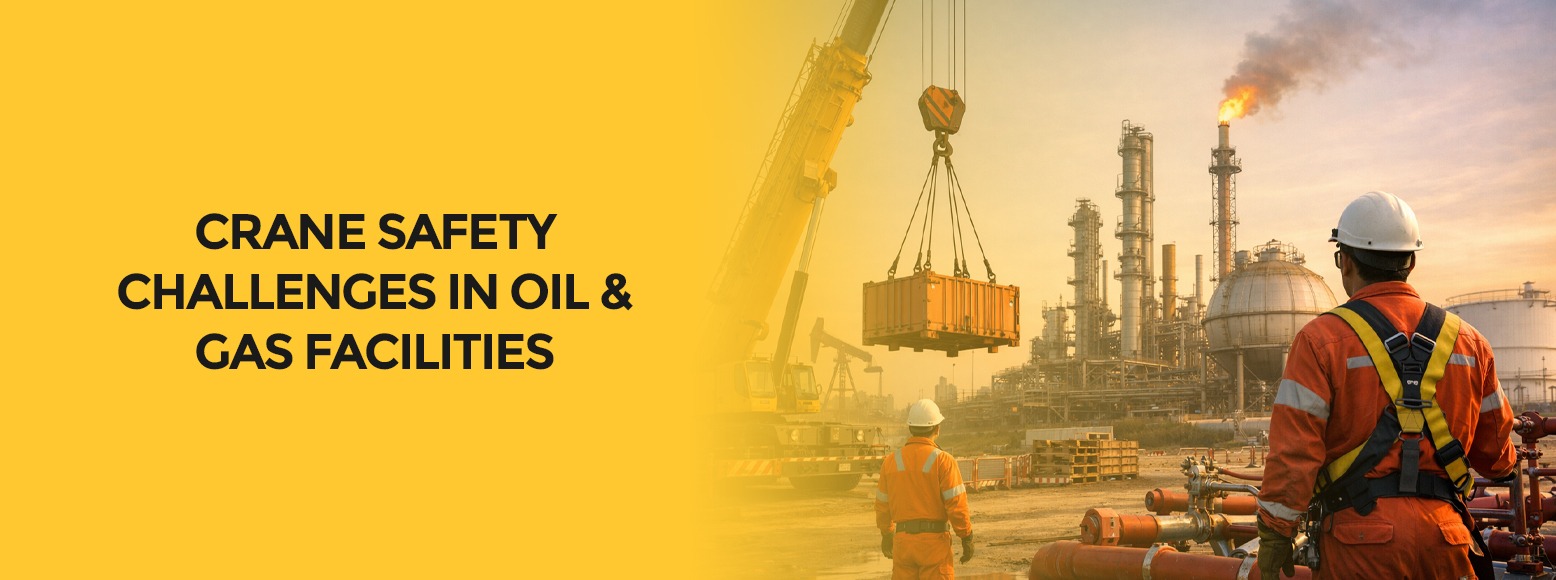
Crane Safety Challenges in Oil & Gas Facilities
Crane operations are a daily reality across oil & gas facilities in the UAE and the Kingdom of Saudi Arabia (KSA). From lifting pipe spools in refineries to positioning heavy modules in offshore platforms, cranes play a critical role in keeping projects on schedule.
But with that importance comes risk.
Oil & gas facilities are among the most hazardous industrial environments in the world. When you combine heavy loads, flammable atmospheres, tight workspaces, extreme temperatures, and high-pressure operations, crane safety becomes a serious matter of life, assets, and environmental protection.
Why Crane Safety Is Critical in Oil & Gas
The Middle East is home to some of the world’s largest oil & gas assets, including the following:
- Saudi Aramco
- Abu Dhabi National Oil Company (ADNOC)
- QatarEnergy
Facilities operated by these companies include refineries, gas processing plants, LNG terminals, offshore platforms, and petrochemical complexes.
A crane incident in such environments can result in
- Fire or explosion
- Hydrocarbon release
- Fatalities or serious injuries
- Massive production loss
- Regulatory penalties
- Reputation damage
Unlike construction sites, oil & gas facilities operate around live hydrocarbons. A single dropped object or spark can escalate into a catastrophic event.
Understanding Crane Operations in Oil & Gas
Before diving into challenges, let’s clarify where cranes are used:
1. Construction Phase
- Erection of steel structures
- Installing vessels, tanks, and compressors
- Heavy modular lifts
2. Maintenance & Shutdown (Turnaround)
- Replacing heat exchangers
- Removing and reinstalling pumps
- Lifting large valves and piping
3. Offshore Operations
- Cargo handling
- Personnel transfer baskets
- Equipment lifting between supply vessels and platforms
Each phase presents different safety challenges.
Major Crane Safety Challenges in Oil & Gas Facilities
1. Hazardous (Explosive) Atmospheres
Oil & gas plants frequently contain flammable vapors such as methane, propane, and hydrogen.
Why This Is Dangerous
- Electrical sparks from crane systems can ignite gases.
- Static electricity buildup can cause ignition.
- Overheated mechanical parts can create hot surfaces.
UAE & KSA Consideration
Facilities must comply with hazardous area classifications under international standards and client specifications (such as those from ADNOC and Aramco).
Controls
- Explosion-proof components
- Intrinsically safe control systems
- Grounding and bonding of cranes
- Gas testing before lifting operations
- Strict permit-to-work system
2. Heavy & Critical Lifts
Oil & gas equipment is extremely heavy. Reactors, pressure vessels, and compressors may weigh hundreds or thousands of tons.
Risks
- Overloading
- Crane tipping
- Structural collapse
- Ground failure
- Dropped load
What Makes It Worse in GCC?
- Soft desert soils
- High wind exposure
- Large modular construction projects
Control Measures
- Engineered lift plans
- Ground bearing pressure analysis
- Load charts are strictly followed
- Third-party inspection for critical lifts
- Weather monitoring systems
3. Congested & Confined Work Areas
Refineries and gas plants are tightly packed with:
- Pipe racks
- Steel structures
- Cable trays
- Operating units
This increases the risk of collision and blind lifting.
Common Problems
- Limited swing radius
- Restricted crane positioning
- Risk of striking live equipment
Controls
- Detailed lift planning
- 3D modeling before execution
- Designated signalers
- Use of taglines
- Barricading drop zones
4. Extreme Weather Conditions
High Temperatures
Summer temperatures can exceed 50°C.
Impact:
- Hydraulic system overheating
- Operator fatigue
- Reduced equipment performance
High Winds & Sandstorms
Wind is one of the leading causes of crane instability.
Impact:
- Load swing
- Crane tipping
- Reduced visibility
Controls
- Defined wind speed limits
- Heat stress management programs
- Frequent equipment inspection
- Weather tracking systems
5. Offshore & Marine Challenges
Offshore operations in the Arabian Gulf add additional complexity.
Key Risks
- Vessel movement (heave, roll, pitch)
- Dynamic loading
- Limited escape routes
- Salt corrosion
Controls
- Motion-compensated cranes
- Anti-corrosion maintenance programs
- Strict cargo transfer procedures
- Offshore-certified operators
6. Ground Stability in Desert Environments
Many oilfields in the KSA and UAE are located in desert terrain.
Issues
- Loose sand
- Underground pipelines
- Hidden voids
- Improper compaction
Crane outriggers exert enormous pressure on the ground.
Controls
- Soil testing
- Crane mats
- Engineered foundations
- Utility clearance checks
7. Human Factors & Communication
Many crane accidents are caused by human error.
Common Causes
- Miscommunication between the rigger and the operator
- Language barriers
- Fatigue during long shifts
- Complacency during routine lifts
Controls
- Standard hand signals
- Clear radio communication protocols
- Pre-lift toolbox talks
- Clear role assignment
- Fatigue management
8. Equipment Maintenance & Corrosion
Oil & gas environments are harsh.
Contributing Factors
- Salt air (coastal facilities)
- Chemicals
- Continuous use
- High humidity
Risks
- Wire rope failure
- Hydraulic leaks
- Structural fatigue cracks
Controls
- Daily inspections
- Non-destructive testing (NDT)
- Scheduled preventive maintenance
- Digital inspection logs
Types of Cranes Commonly Used in the UAE & KSA Oil & Gas
- Mobile cranes
- Crawler cranes
- Tower cranes
- Offshore pedestal cranes
- Rough-terrain cranes
Each type has different risk profiles and operational limitations.
Regulatory and Client Requirements in UAE & KSA
Crane operations must comply with:
- International standards (ISO, OSHA)
- Client safety frameworks (Aramco GI, ADNOC COP)
- Local labor and safety authorities
Non-compliance can result in the following:
- Project shutdown
- Heavy fines
- Blacklisting of contractors
What Happens When Crane Safety Fails?
A crane incident in oil & gas can escalate rapidly.
Possible consequences:
- Fire/explosion
- Environmental contamination
- Facility shutdown
- Multiple casualties
- Severe legal liability
The financial impact can reach millions of dollars per hour of downtime.
Step-by-Step Safe Lifting Process
Here is a simplified safe lifting workflow:
Step 1: Planning
- Identify load weight
- Verify crane capacity
- Assess ground conditions
- Check the weather forecast
Step 2: Risk Assessment
- Identify hazards
- Define control measures
- Obtain a permit to work.
Step 3: Equipment Inspection
- Crane inspection
- Rigging inspection
- Safety devices check
Step 4: Toolbox Talk
- Assign roles
- Review the lift plan
- Confirm communication method
Step 5: Execute Lift
- Controlled movements
- Continuous monitoring
- Stop if unsafe conditions arise
Step 6: Post-Lift Review
- Document lessons learned
- Report near misses
Frequently Asked Questions
1. What is a critical lift in oil & gas?
A critical lift typically involves:
- Load exceeding 75–90% of crane capacity
- Dual crane operation
- Lifting over live equipment
- High-risk environments
These lifts require engineered lift plans and management approval.
2. What is the biggest crane safety risk in the UAE and KSA?
High winds and unstable ground conditions are major risks, especially in desert and coastal facilities.
3. How often should cranes be inspected?
- Daily pre-use inspection
- Monthly detailed inspection
- Annual third-party inspection
Client requirements may mandate additional checks.
4. Why are wind limits so important?
Wind creates dynamic load forces. Even if a crane is within its rated capacity, strong wind can cause tipping or uncontrolled load swings.
5. What is ground bearing pressure?
It is the pressure exerted by crane outriggers on the soil. If the ground cannot support it, the crane can collapse.
6. Are offshore crane operations more dangerous?
Yes. Vessel motion, corrosion, and limited escape options increase risk compared to onshore operations.
7. Who is responsible for crane safety?
Responsibility is shared between:
- Crane operator
- Rigger/slinger
- Lifting supervisor
- HSE officer
- Project management
8. How can companies reduce crane accidents?
- Proper training
- Strict lift planning
- Strong supervision
- Regular inspections
- Clear communication protocols
Quick Decision Table: Crane Safety Risk Check
| Condition | Risk Level | Action Required |
| Load > 85% crane capacity | High | Engineer lift plan & management approval |
| Wind speed > site limit | High | Stop lifting. |
| Soft/untested ground | High | Conduct soil test & use crane mats |
| Lift over live hydrocarbon equipment | High | Additional risk assessment required |
| Poor visibility | Medium/High | Delay lift |
| New crew or communication barrier | Medium | Conduct a detailed toolbox talk |
| Routine lift, controlled area | Low | Follow standard procedure |
Final Thoughts
Crane safety in oil & gas facilities across the UAE and KSA is not just about compliance—it’s about protecting lives, critical infrastructure, and national assets.
With mega-projects, refinery expansions, offshore developments, and maintenance turnarounds constantly underway, crane operations will remain essential to the region’s energy sector.
By focusing on:
- Proper lift planning
- Hazard identification
- Strong communication
- Weather awareness
- Ground stability
- Equipment inspection
You significantly reduce the risk of catastrophic incidents.
Safety is not a document—it is a discipline practiced with every single lift.