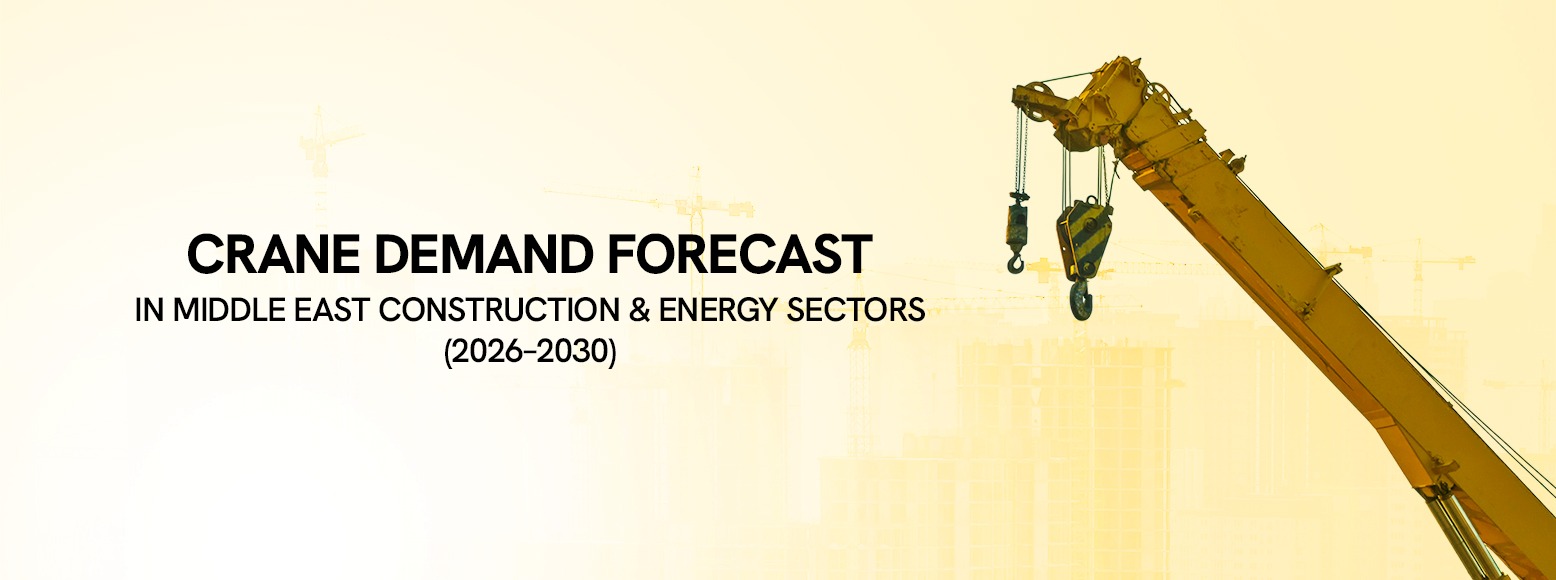
Crane Demand in the Middle East: Construction & Energy Sectors Forecast (2026–2030)
The Middle East is witnessing one of the most transformative periods in construction and energy development. From towering skyscrapers in Dubai to massive LNG facilities in Qatar, the demand for cranes—vital machines that lift, move, and place heavy loads—has never been higher. If you are a construction professional, an energy sector planner, or simply someone interested in industrial trends, understanding the crane market forecast is crucial. This blog breaks it down in a beginner-friendly way.
1. Why Cranes Are Essential in Construction and Energy
Cranes are more than just machines—they are the backbone of modern construction and industrial operations. They allow projects to be completed faster, safer, and more efficiently.
- Construction Sector: Cranes lift steel, concrete, and other materials for high-rise buildings, bridges, roads, and urban infrastructure.
- Energy Sector: Cranes handle heavy machinery for oil rigs, LNG plants, solar farms, and other large-scale energy installations.
Different types of cranes serve different purposes. Tower cranes dominate city skylines, mobile cranes excel in flexibility across project sites, and crawler cranes handle the heaviest loads in oil and gas projects. Understanding crane types is the first step in grasping market trends.
2. Types of Cranes in High Demand
Here’s a simple guide to the most common cranes used in the Middle East:
a. Tower Cranes
- Purpose: Ideal for high-rise buildings and urban megaprojects.
- Key Feature: Tall, fixed structures capable of lifting heavy loads to great heights.
- Example Use: Skyscraper construction in Dubai and Riyadh.
b. Mobile Cranes
- Purpose: Flexible lifting across various locations.
- Key Feature: Can move on wheels or tracks; quick setup.
- Example Use: Infrastructure projects, such as roads, bridges, and stadiums.
c. Crawler Cranes
- Purpose: Handles extremely heavy loads and uneven terrains.
- Key Feature: Tracks provide stability and mobility on rough ground.
- Example Use: Oil rigs, LNG plants, and large industrial installations.
d. Overhead & Gantry Cranes
- Purpose: Mainly used in factories, logistics hubs, and ports.
- Key Feature: Lifts loads horizontally over long spans.
- Example Use: Assembly lines, shipyards, and container handling.
3. Crane Demand Drivers in the Middle East
Several factors are driving the high demand for cranes in the region:
a. Megaprojects
Countries like Saudi Arabia, the UAE, and Qatar are investing billions in megaprojects such as:
- Saudi Arabia: NEOM, Riyadh Metro, Qiddiya.
- UAE: Expo 2020 legacy projects, new urban districts.
- Qatar: Lusail City, stadiums, and the North Field LNG expansion.
These projects require cranes capable of lifting heavy materials to great heights, ensuring steady demand for tower and mobile cranes.
b. Energy Infrastructure
The energy sector in the Middle East includes:
- Oil and gas refineries
- LNG plants
- Renewable energy installations
Heavy-lift cranes, including crawler and offshore cranes, are essential for building and maintaining this infrastructure.
c. Urbanization and Population Growth
Rapid urbanization creates the need for more residential buildings, roads, and bridges. As a result, mobile and tower cranes are increasingly deployed in urban centers.
d. Government Investments
Saudi Vision 2030 and the UAE’s infrastructure plans are examples of government-backed initiatives that fuel crane demand.
4. Crane Market Forecast (2026–2030)
The Middle East crane market is projected to grow steadily from 2026 to 2030. Key highlights:
| Crane Type | Forecasted CAGR | Primary Market |
| Tower Cranes | 5–5.5% | Urban construction |
| Mobile Cranes | 6%+ | Infrastructure & industrial projects |
| Crawler Cranes | 6–7% | Oil, gas, and heavy construction |
| Offshore Cranes | 5–6% | Renewable and offshore energy projects |
Key Takeaway: Demand growth is consistent across construction and energy sectors. Rental services are also becoming more popular due to cost efficiency and project flexibility.
5. Technological Advancements in Cranes
Modern cranes are becoming smarter, safer, and more efficient:
- Hybrid & Electric Cranes: Reduce fuel consumption and emissions.
- Digitalization & Automation: Sensors and IoT allow remote monitoring and predictive maintenance.
- Safety Features: Anti-collision systems, overload protection, and enhanced operator cabins improve workplace safety.
These technological trends are shaping crane demand because companies prefer newer, safer, and more efficient machines for large-scale projects.
6. Renting vs. Buying Cranes
For many businesses, the question is: Should we buy or rent?
Benefits of Renting
- Lower upfront cost
- Flexibility for short-term projects
- Maintenance often included
Benefits of Buying
- Long-term cost savings
- Full control over equipment
- Customization for specific project needs
In the Middle East, the trend is shifting toward crane rental, especially for mega construction and energy projects.
7. Key Challenges in the Crane Market
Despite strong growth, there are challenges:
- Skilled Operators Shortage: High demand for trained crane operators and engineers.
- Maintenance and Spare Parts: Access to high-quality parts and maintenance services can be limited in remote areas.
- Regulatory Compliance: Safety standards vary across countries and must be strictly followed.
- Economic Fluctuations: Oil price swings and global economic trends can affect construction and energy investments.
Understanding these challenges helps businesses plan better and invest wisely.
8. Regional Insights
Saudi Arabia
- Leads crane demand due to Vision 2030 projects.
- Focus on tower cranes for high-rise construction.
UAE
- Dubai and Abu Dhabi drive mobile and tower crane demand.
- Focus on sustainable and smart construction.
Qatar
- Energy sector drives crawler and offshore crane demand.
- Major LNG and stadium projects require heavy lifting solutions.
Other countries like Oman and Bahrain are smaller markets but steadily growing.
9. Forecasted Opportunities
- Green Construction: Renewable energy projects will require specialized cranes for solar farms and wind turbines.
- Infrastructure Expansion: Roads, bridges, and metro lines across the region continue to push mobile crane demand.
- Digital & Automated Cranes: Companies investing in automated cranes can achieve safer and faster construction.
This makes 2026–2030 an exciting period for crane manufacturers, rental companies, and contractors in the Middle East.
FAQs
Q1: Why is crane demand high in the Middle East?
A1: The region has numerous megaprojects, rapid urbanization, and growing energy infrastructure, driving the need for tower, mobile, and crawler cranes.
Q2: Which cranes are most popular for construction projects?
A2: Tower cranes for skyscrapers, mobile cranes for flexible site operations, and crawler cranes for heavy industrial projects.
Q3: How is the energy sector affecting crane demand?
A3: Oil, gas, LNG, and renewable energy projects require heavy-lifting cranes for construction and maintenance.
Q4: Should companies rent or buy cranes?
A4: Renting is cost-effective for short-term projects, while buying is ideal for long-term, continuous use.
Q5: What technological trends are shaping crane demand?
A5: Hybrid/electric cranes, automation, digital monitoring, and enhanced safety systems are increasingly preferred.
Q6: What are the key challenges in the crane market?
A6: Skilled labor shortage, maintenance and parts availability, regulatory compliance, and economic fluctuations.
Q7: Which countries in the Middle East lead crane demand?
A7: Saudi Arabia, UAE, and Qatar are the top markets due to construction megaprojects and energy infrastructure.
Q8: How will crane demand evolve by 2030?
A8: Demand will grow steadily across all major segments, driven by megaprojects, energy expansion, and technology adoption.
Conclusion
The Middle East crane market from 2026 to 2030 is set for steady growth, with both construction and energy sectors driving demand for tower, mobile, crawler, and offshore cranes. Megaprojects, urbanization, government initiatives, and technological innovations are creating exciting opportunities for crane manufacturers, rental companies, and contractors.
For beginners, understanding crane types, market drivers, and trends can help make informed decisions about equipment, project planning, and investments.