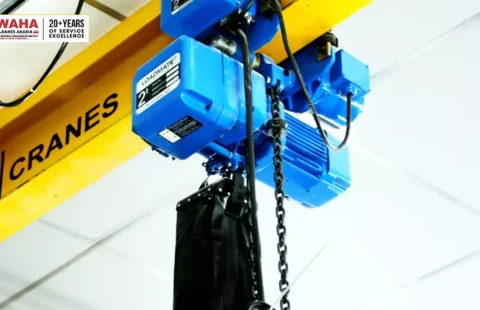
How Construction Cranes Work: A Breakdown of Their Mechanism and Uses
A crane looks complicated, but it relies on a few simple principles: leverage, pulleys and balance. Understanding these helps you operate, specify and supervise lifting work more safely.
This guide explains the main parts of a crane, how it lifts and moves a load, how it stays stable, and what safety systems protect the lift.
The Basics: Three Principles Behind Every Crane
- Mechanical advantage: pulleys, gears and drums let a motor lift loads far heavier than it could move directly.
- Leverage: the boom or jib extends the reach of the lift, like a lever.
- Balance: counterweights and a stable base resist the tipping force the load creates.
Main Components of a Crane
| Component | What It Does | Found On |
|---|---|---|
| Boom or jib | Long arm that extends reach and height | Tower, mobile, crawler cranes |
| Hoist | Lifts and lowers the load using a motor, drum and rope or chain | All crane types |
| Hook and block | Connects the load to the hoist rope | All crane types |
| Wire rope | Carries the load; wound on a drum and through pulleys | Most crane types |
| Trolley | Moves the hoist along the jib or girder for horizontal travel | Tower and overhead cranes |
| Slew unit | Rotates the crane’s upper structure | Tower, mobile, crawler cranes |
| Counterweight | Balances the load to prevent tipping | Tower, mobile, crawler cranes |
| Outriggers | Extend from the body to widen the support base | Mobile cranes |
| Operator cab or controls | Where the operator controls movement (cab, pendant or radio remote) | All crane types |
| Bridge or girder and runway | Horizontal beam and rails the crane travels on | Overhead and gantry cranes |
How a Crane Lifts a Load
- Rigging: the load is attached to the hook with slings or lifting accessories rated for the weight.
- Hoisting: the operator starts the hoist motor, which turns a drum. Rope winds onto the drum and raises the hook through the pulleys in the block.
- Mechanical advantage: multiple rope “falls” through the pulleys share the load, so a smaller motor can lift a heavier weight, at slower speed.
- Braking: brakes hold the load safely when movement stops, and control systems regulate speed.
How a Crane Moves a Load
Crane movements depend on type, but most use some combination of:
- Hoisting: raising and lowering the load.
- Trolleying: on tower and overhead cranes, the trolley moves along the jib or girder to change reach.
- Slewing: on tower, mobile and crawler cranes, the upper structure rotates to swing the load around.
- Luffing or telescoping: on mobile and crawler cranes, the boom raises, lowers or extends to change height and radius.
- Travelling: on overhead and gantry cranes, the bridge moves along rails; mobile cranes drive on wheels or tracks.
How Cranes Stay Stable
The farther the load is from the crane’s center, the greater the tipping force. Cranes manage this through:
- Counterweights: placed opposite the load to balance the lifting moment.
- A wide, firm base: outriggers and mats on mobile cranes, tracks on crawler cranes, and a concrete base or ballast on tower cranes.
- Rated capacity charts: these show the safe load at each radius and boom angle. Capacity decreases as radius increases, so a crane that lifts a heavy load close in may lift much less at full reach.
- Ground conditions: soft or uneven ground reduces stability and must be assessed before setting up.
- Wind: wind increases load swing and tipping risk, so lifting must follow the manufacturer’s wind limits.
Crane Types and How Their Operation Differs
| Crane Type | How It Works | More Info |
|---|---|---|
| Tower crane | Fixed mast, rotating jib, trolley and counterweight for high-rise lifting | Tower crane guide |
| Mobile crane | Telescopic or lattice boom on a wheeled carrier, with outriggers | Types of construction cranes |
| Crawler crane | Lattice boom on tracks for heavy lifts and soft ground | Types of construction cranes |
| Rough terrain crane | Compact mobile crane with large tires for uneven ground | Types of construction cranes |
| Overhead (EOT) crane | Hoist and trolley travel along a girder on elevated runway rails | Electric overhead cranes |
| Gantry crane | Overhead-style crane on legs, running on floor-level rails | Gantry cranes |
Safety Systems on Modern Cranes
- Overload protection / load limiters: stop lifting when the load exceeds rated capacity.
- Load moment indicators (LMI): continuously compare the load and geometry against the capacity chart.
- Limit switches: stop hoisting or travel at set positions.
- Emergency stop: halts all movement immediately.
- Anti-collision systems: prevent contact with obstacles or other cranes.
- Anemometer: measures wind speed and warns when limits are approached.
Learn more in our guide to the latest crane technologies.
Crane Safety Tips for Site Teams
- Use trained, certified operators and riggers.
- Stay within rated capacity, accounting for slings, hooks and attachments as part of the load.
- Inspect before use, and follow scheduled maintenance and periodic examination.
- Set up correctly: use outriggers, mats, and a stable, level surface where applicable.
- Communicate clearly: use a competent signaler and agreed signals or radios.
- Keep the area clear: nobody under suspended loads, with exclusion zones around the lift.
- Check the weather, especially wind, before and during lifts. See our guide on weather impact on cranes.
(Review these against your own safety procedures and local regulations before publishing.)
Frequently Asked Questions
1. How does a crane lift heavy loads?
Answer: A hoist motor turns a drum that winds wire rope through a system of pulleys, which gives mechanical advantage so a smaller motor can lift a heavier load. The boom or jib provides reach, and counterweights or a wide base keep the crane stable.
2. What are the main parts of a crane?
The main parts are the boom or jib, hoist, wire rope, hook and block, trolley (on tower and overhead cranes), slew unit, counterweight, outriggers (on mobile cranes), and the operator controls or cab.
3. What is the purpose of a counterweight?
Answer: A counterweight balances the crane against the load it lifts, which prevents the crane from tipping, especially when the load is far from the crane’s center.
4. Why does a crane’s lifting capacity decrease at longer reach?
Answer: The farther a load is from the crane’s center, the greater the tipping moment it creates. Capacity charts therefore show a lower safe load at greater radius.
5. What are outriggers and why are they used?
Answer: Outriggers are extendable supports on mobile cranes that widen the base, spread the load into the ground and improve stability during lifts.
6. What is the difference between hoisting, slewing and luffing?
Answer: Hoisting raises and lowers the load, slewing rotates the crane’s upper structure, and luffing raises or lowers the boom to change radius and height.
7. What safety devices do cranes have?
Answer: Common devices include overload protection, load moment indicators, limit switches, emergency stops, anti-collision systems and wind sensors.
8. How is an overhead crane different from a tower crane?
Answer: A tower crane stands on a fixed base with a rotating jib and trolley, mainly for building construction. An overhead crane runs on elevated rails inside a facility, with a hoist and trolley travelling along a girder.
Final Takeaway
Cranes work by combining leverage, pulleys and balance. A hoist lifts, a boom or jib extends reach, a trolley or slew moves the load, and counterweights and a stable base keep everything safe. Choosing the right crane for the application, and operating it within its rated limits, is what keeps lifts safe.
Need help specifying, installing or maintaining a crane? Contact Al Waha Cranes about EOT, gantry, jib and monorail crane systems, hoists, and crane inspections and maintenance.